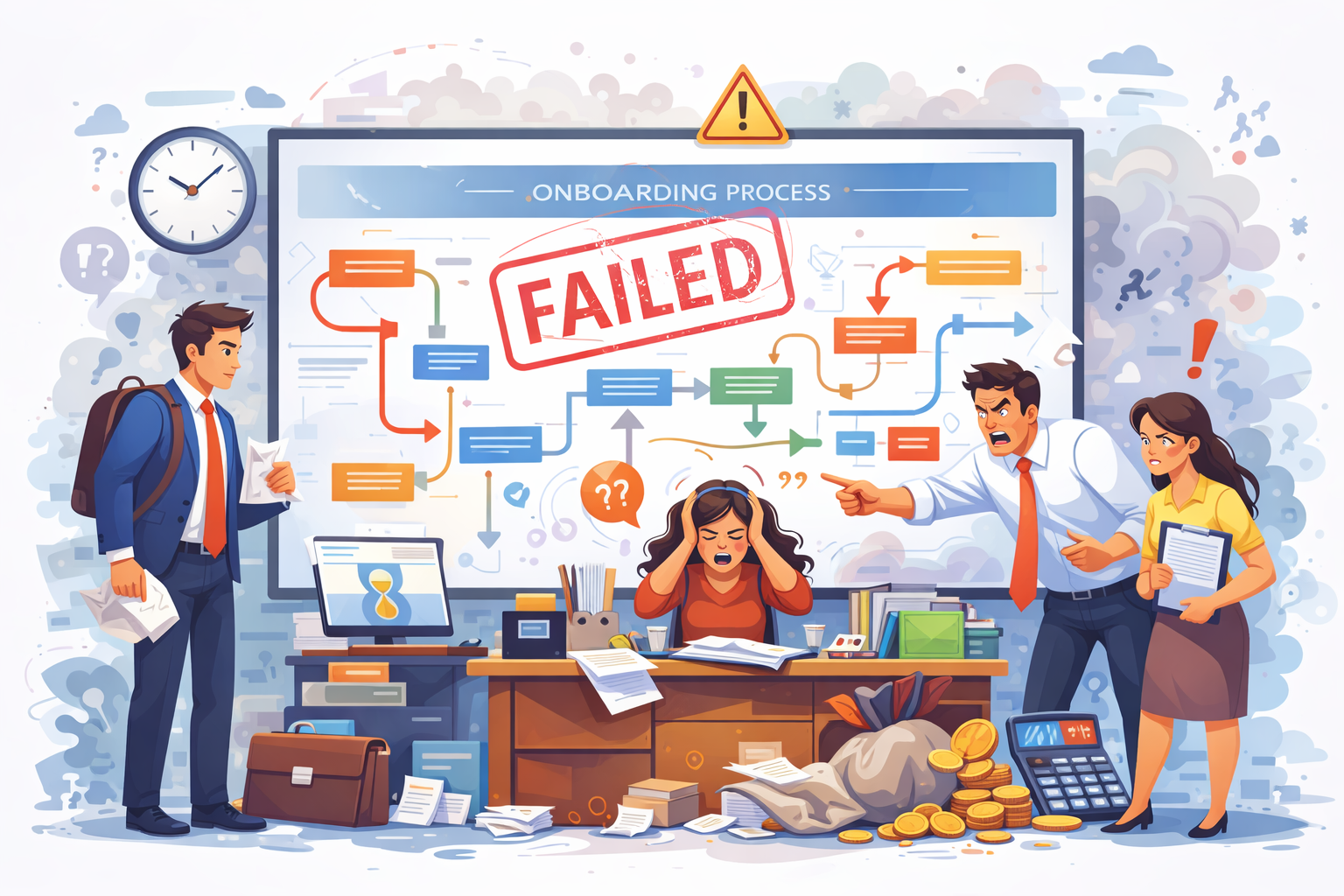

When a new employee walks into your business for the first time, they carry hopes, expectations, and a drive to make a difference. However, if their enthusiasm is met with disorganization, confusion, and a lack of support, you may inadvertently be setting the stage for high turnover, low productivity, and a less engaged workforce. A poor onboarding process can cost your business in significant ways, both in direct expenses and in less obvious but equally damaging areas. Let’s break down why investing in an effective onboarding process is crucial for your organization’s success.

The High Cost of Turnover
One of the most immediate and quantifiable ways a poor onboarding process impacts your business is through increased employee turnover. Research shows that organizations with a strong onboarding process improve new hire retention by 82% and productivity by over 70%. On the flip side, when onboarding is disorganized or incomplete, new employees are more likely to leave within the first few months. Considering the high cost of recruiting, hiring, and training new employees, turnover becomes a major financial burden.

Here is why turnover is so costly:
- Impact on Team Morale: High turnover affects existing staff, potentially leading to burnout or lowered engagement as they pick up the slack or see colleagues constantly coming and going.
- Recruitment and Training Expenses: Finding and hiring replacements is not cheap. Recruitment costs, job advertising fees, interview time, and training expenses add up quickly.
- Lost Productivity: It takes time for new hires to reach full productivity, and in the interim, work output and efficiency can drop.
Reduced Productivity and Efficiency
A well-structured onboarding process provides employees with the tools, knowledge, and support they need to excel. Without this guidance, new hires may struggle to understand their roles and responsibilities or how to best contribute to your business.

Imagine a scenario where a new team member joins but is given little direction or, worse, conflicting information about their job. They are left feeling uncertain and hesitant, resulting in mistakes or missed opportunities to streamline processes. In contrast, employees who have undergone thorough onboarding are more likely to hit the ground running, making meaningful contributions from the start.
How a poor onboarding process reduces productivity:
- Delayed Integration: Without a solid introduction to team dynamics and company culture, it takes longer for new employees to feel comfortable and collaborate effectively.
- Unclear Expectations: If job roles and responsibilities are not clearly defined, employees may waste time doing tasks incorrectly or duplicating efforts.
- Limited Access to Resources: New hires who do not know where to find necessary tools or who to ask for help can not perform at their best.
Damaged Company Culture
Your onboarding process sets the tone for your company culture. A disorganized or impersonal experience can make new employees feel undervalued and disconnected, impacting their long-term engagement and loyalty. Onboarding is not just about paperwork and office tours; it is about making new hires feel like a part of something meaningful from day one.
Consequences of a negative first impression include:
- Decreased Engagement: Disengaged employees are less motivated and less likely to go above and beyond in their roles.
- Negative Word of Mouth Advertising: Employees who have a bad onboarding experience may share their dissatisfaction with others, affecting your company’s reputation and making it harder to attract top talent.
- Reduced Team Cohesion: New hires who do not feel integrated may struggle to connect with colleagues, creating an environment of isolation rather than collaboration.

The Impact on Customer Experience
Employees who are well-trained and engaged are better equipped to deliver excellent customer service. If your team is not onboarded correctly, this can have a ripple effect, ultimately impacting your customers. Whether it is a customer service representative who cannot answer questions confidently or a sales associate who does not fully understand the product, a lack of proper onboarding can lead to a poor customer experience, hurting your brand and bottom line.
Missed Opportunities for Innovation
A thorough onboarding process allows new employees to feel comfortable enough to share fresh ideas and perspectives. They are coming in with a unique viewpoint that can be beneficial if harnessed early on. A poor onboarding process may discourage them from speaking up or offering innovative solutions, and your business misses out on potential growth opportunities.

How to Build a Successful Onboarding Process
Creating a successful onboarding experience does not have to be complicated or expensive, but it does need to be thoughtful and consistent. Here are some best practices:
- Start Before Day One: Send new hires welcome emails, essential paperwork, and an outline of what to expect on their first day.
- Provide a Structured Schedule: Create a detailed plan that includes training sessions, one-on-one meetings with managers, and opportunities to meet team members.
- Assign a Mentor or Buddy: A mentor can help guide new employees and answer questions, making them feel more comfortable and integrated.
- Communicate Company Values: Use the onboarding process to communicate your company’s mission, vision, and culture, ensuring employees feel connected to your purpose.
- Solicit Feedback: Regularly ask for feedback about the onboarding experience and use it to make continuous improvements.
In Summary
A poor onboarding process does not just affect new employees; it impacts your entire business ecosystem. From increased turnover and decreased productivity to a weakened company culture and missed opportunities for innovation and recruitment, the costs are too significant to ignore. By investing in a comprehensive and thoughtful onboarding strategy, you can set your employees—and your business—up for long-term success.
Remember, the first impression matters, and in the workplace, a positive onboarding experience can make all the difference.
Should you need more comprehensive support on designing an employee onboarding strategy and business process improvement, use the “Contact Us” link to reach out anytime!

Comprehend. Reimagine. Outperform.